
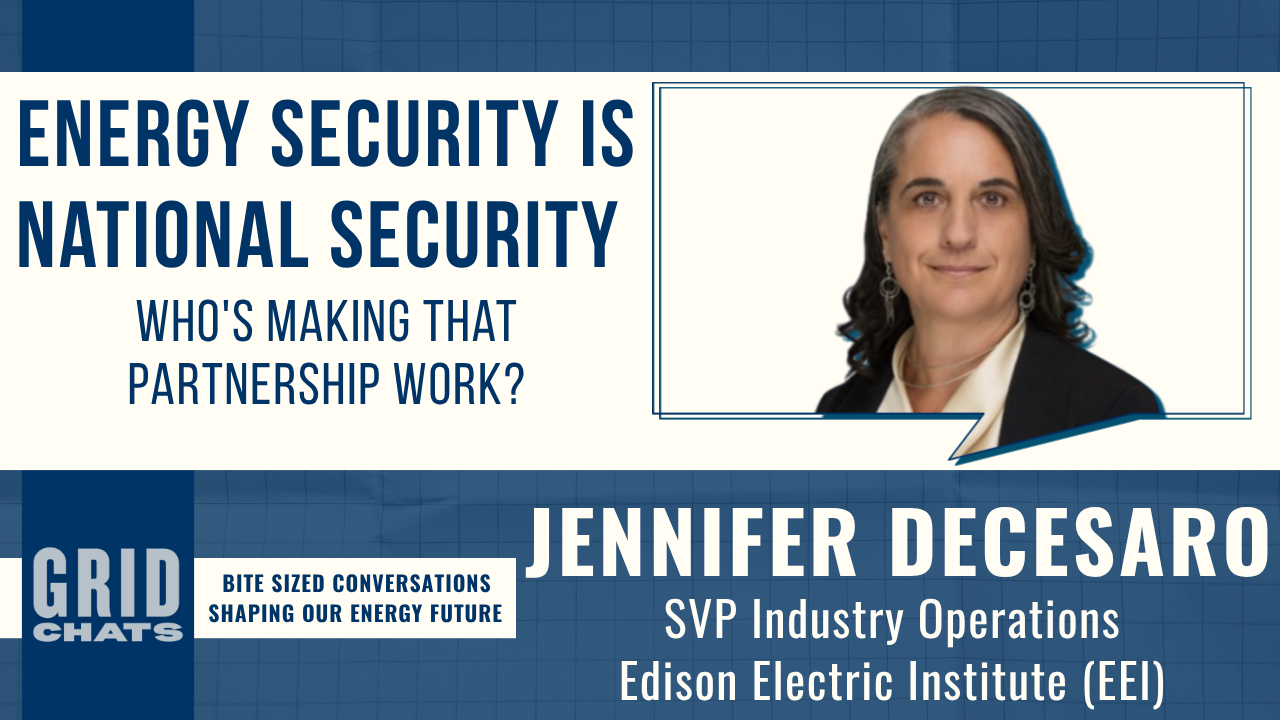
There are no regulatory or policy requirements for electric utilities to prioritize national security in their planning. In the absence of that policy, partnerships have filled the gap for more than a century.
Michael Wu, Converge Strategies, chats with Jennifer DeCesaro, Senior Vice President for Industry Operations at the Edison Electric Institute (EEI) and former Senior Director for Resilience at the National Security Council, on what the partnerships between America’s investor-owned electric companies and the U.S. military look like and why they matter.
What’s Happening? More than 98% of military installations run on civilian power, and no regulatory framework requires utilities to treat them differently from any other customer. What fills that gap are relationships built over decades between electric companies and the installations they serve, reinforced by Memoranda of Understanding with the Army, Navy, and Air Force.
Why It Matters. Electricity demand is rising faster than it has in decades. Data centers, reshored manufacturing, and defense installations are all competing for the same constrained capacity. How mission-critical load gets prioritized, and by whom, has direct consequences for national security.
What’s Next? The work is happening project by project. Hawaiian Electric developed a generation asset at Schofield Barracks to support Army energy resilience. Dominion Energy coordinates grid upgrades with major installations in Virginia. The Department of War, the Army, the Navy, the Air Force, and the Department of Energy are actively working with EEI members to strengthen these relationships and get more of these investments across the finish line.