
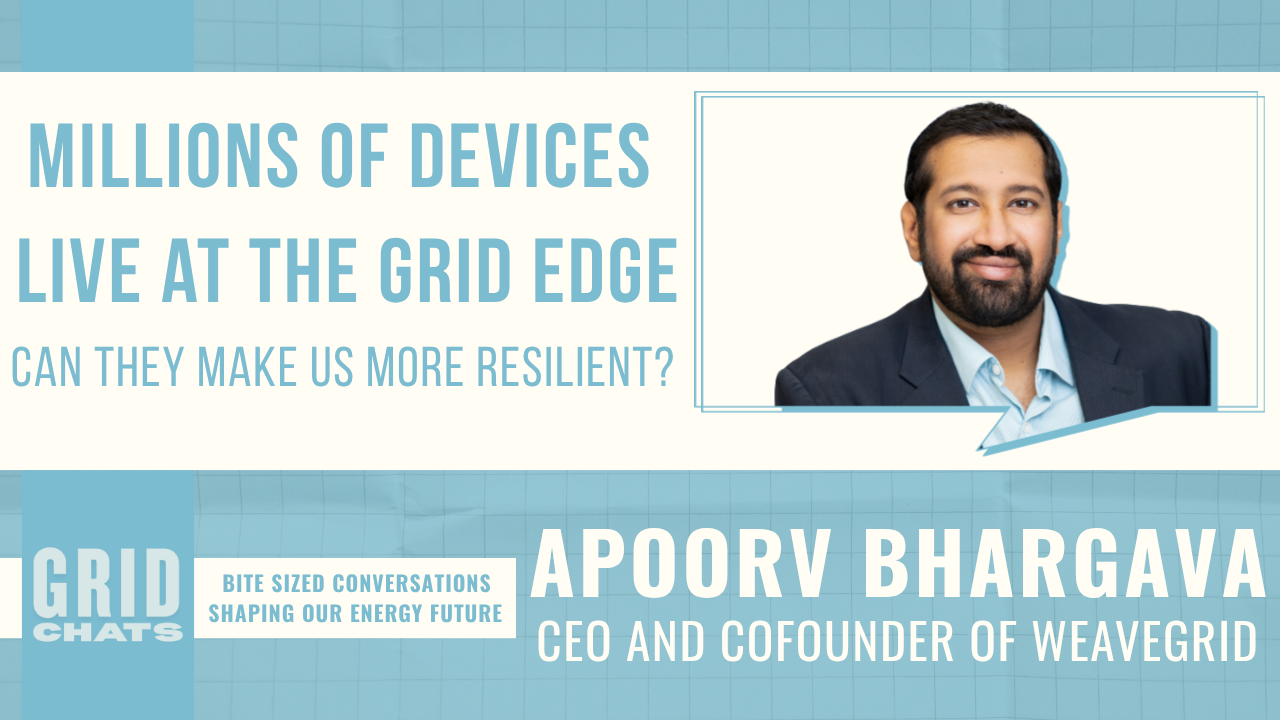
Michael Wu, Converge Strategies, chats with Apoorv Bhargava, CEO and Co-Founder of WeaveGrid, about the millions of EVs and home batteries already sitting in homes across the country, why the grid’s most overlooked layer might be its best shot at resilience, and what it takes to secure a system that’s only getting more connected.
What’s Happening. Customers who own an EV or home battery can opt into programs that enable utilities to serve growing load on existing grid infrastructure affordably and reliably. Platforms like WeaveGrid give utilities permission to shift charging times in exchange for real savings on the electric bill. Aggregated across millions of devices, that flexibility becomes a resource utilities can use to manage costs and reduce strain on the grid.
Why It Matters. Investment in the grid has historically gone to generation and transmission, leaving distribution, the layer closest to the home, underappreciated and underinvested. Distributed devices give utilities a way to relieve stress at exactly that layer, creating pockets of resilience across a system built to flow one direction, top to bottom.
What’s Next. As more distributed energy resources connect to the grid, security has to scale with them. Enrolling in a platform like WeaveGrid puts a device inside a secured system that is built on customer consent, so if something goes wrong in one battery or one neighborhood, it gets isolated before it can spread. The bigger opportunity: pockets of resilience across the distribution network don’t just relieve occasional congestion; they build continuous resilience into the part of the grid watched the least.